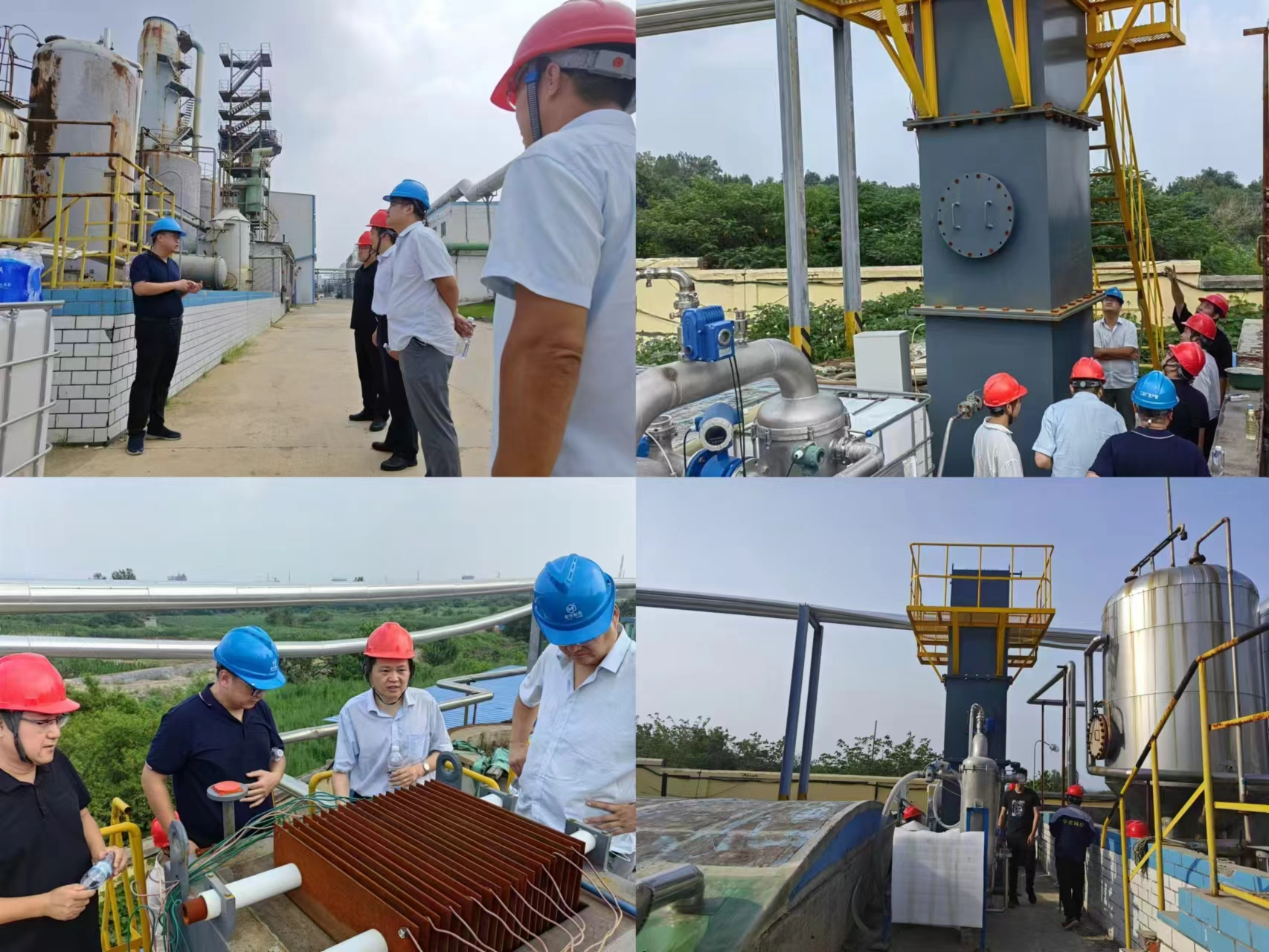
On August 15, 2024, the pilot-scale equipment developed under the National Key R&D Program Key Special Project of “Intergovernmental International Science and Technology Innovation Cooperation” — Research and Development of Advanced Pharmaceutical Wastewater Treatment Technology and Integrated Equipment Based on the Coupling of In-situ Electrocoagulation-Catalytic Ozonation-Ceramic Membrane Filtration — jointly undertaken by Beijing Forestry University, Shandong Huaci Environmental Protection Equipment Technology Co., Ltd. (HCCM), and University of Engineering and Technology, Pakistan, passed expert on-site appraisal and fully meets the requirements specified in the official task book of the National Key R&D Project.
The expert panel participating in the demonstration includes Yu Bin, Chief Director and Professor-level Senior Engineer of Poten Environment Group Co., Ltd.; Guan Chunyu, Professor-level Senior Engineer of Hangzhou Beishui Future Technology Co., Ltd.; and Kong Qiang, Professor of Shandong Normal University.
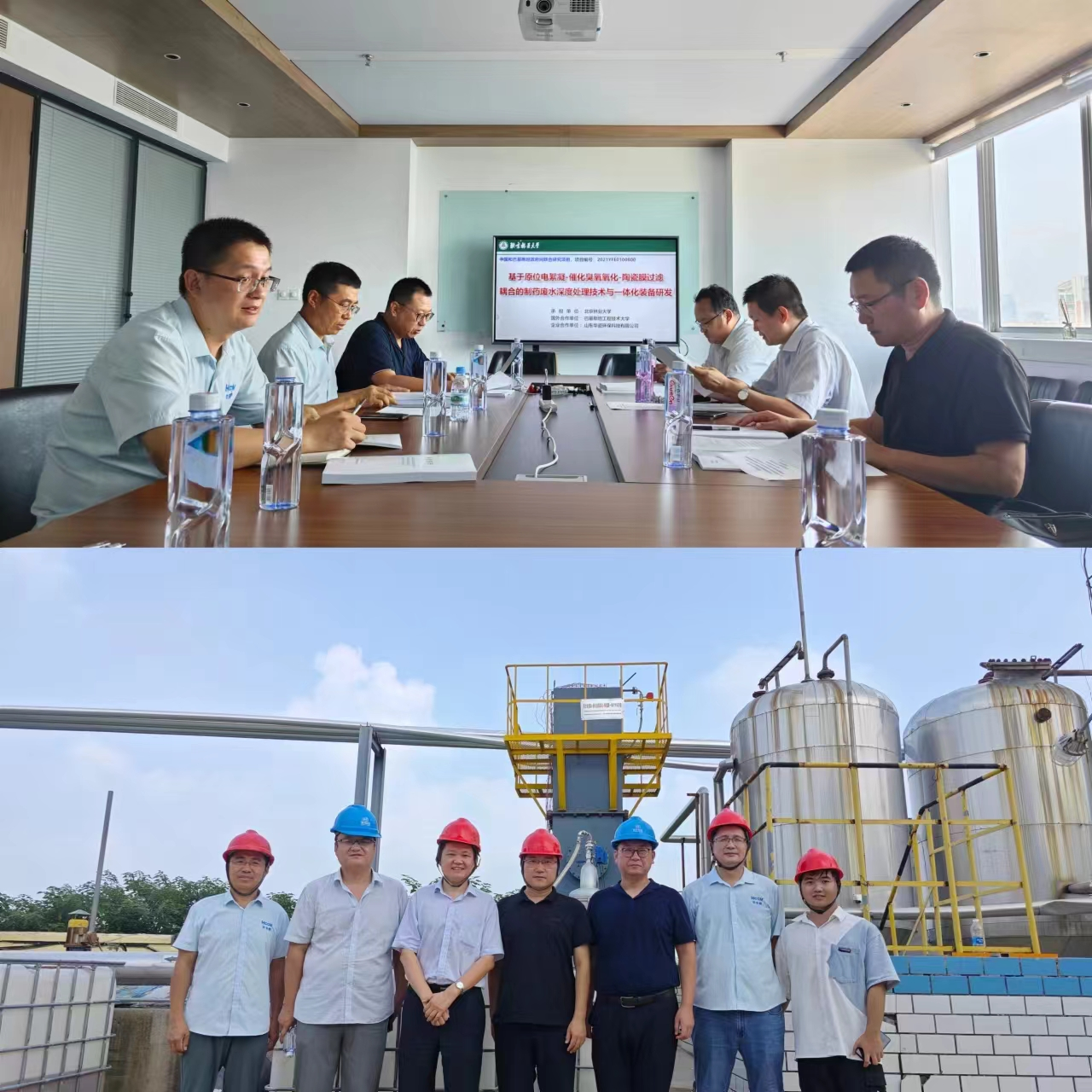
Pharmaceutical wastewater is characterized by complex components, high salinity, high chroma, and refractory residual organic matter in tail water, which poses great difficulties for wastewater degradation and water reuse. Targeting the unique water quality characteristics of pharmaceutical wastewater and its tail water, this project adopts an innovative in-situ coupling treatment method combining electrocoagulation, catalytic ozonation and ceramic membrane separation. The technology realizes highly efficient advanced treatment of pharmaceutical tail water and fully satisfies water reuse standards.
Based on the existing national discharge standards for water pollutants from the pharmaceutical industry (covering fermentation, chemical synthesis, extraction, mixed preparation, bioengineering, and traditional Chinese medicine pharmaceutical industries), the new technology further improves COD removal efficiency by more than 50%, enabling the effluent to reach high-standard reuse water COD indicators.
The project systematically studies the in-situ coupling relationships and interactive response mechanisms of electrocoagulation, catalytic ozonation and ceramic membrane filtration. It scientifically elaborates the synergistic pollutant removal principles of in-situ electrocoagulation and catalytic ozonation, clarifies the respective contributions of electric field flocculation and catalytic oxidation to organic degradation, and reveals the fouling control mechanism of ceramic membranes under in-situ synergistic reaction conditions.
The research focuses on breaking through three core technical bottlenecks: ① realizing efficient in-situ synergistic coupling of flocculation, electrochemical enhancement and catalytic ozonation by optimizing the integrated coupling mode; ② optimizing the key process parameters and operating conditions of the in-situ coupling system; ③ establishing scientific design methods and core parameter standards for integrated in-situ coupling treatment equipment.
The project effectively solves the common engineering problems of poor coordination and low efficiency of traditional single-unit treatment processes. In addition to technological breakthroughs, it also cultivates high-level professional technical talents for China’s pharmaceutical wastewater treatment, sewage treatment and ecological environmental protection industries.
The project has been steadily implemented for three years. During the research period, Professor Qi Fei from Beijing Forestry University conducted multiple on-site inspections and technical guidance for experimental verification. Up to now, one national invention patent has been granted for this project. The self-developed integrated treatment equipment has operated stably for more than six months in pilot application at a large pharmaceutical enterprise, achieving stable advanced treatment and reuse of pharmaceutical wastewater.
The project has further promoted in-depth international and industrial cooperation in the field of advanced industrial wastewater treatment and water reuse, accelerating the engineering application and industrialization of the coupled membrane treatment technology. The overall technical level of the project has reached the advanced domestic standard.